
In the realm of electronic design and signal conditioning, the precision control of resistance is a fundamental requirement. The **AD5206BRUZ10** from Analog Devices stands out as a sophisticated and highly integrated solution, offering six independent, digitally controlled potentiometers in a single compact package. This device effectively replaces mechanical potentiometers, bringing enhanced reliability, programmability, and space savings to a wide array of applications.
**What is the AD5206BRUZ10?**
The AD5206BRUZ10 is a **6-channel, 10 kΩ digital potentiometer** (digipot). Each channel functions as a programmable resistor with a fixed end-to-end resistance of 10 kΩ and a wiper whose position is set by a digital code transmitted via a serial peripheral interface (SPI). This allows for precise and dynamic adjustment of resistance values without any mechanical movement, eliminating the wear and tear, noise, and physical size limitations inherent in traditional potentiometers.
**Key Features and Specifications**
* **6 Independent Channels:** Integrates six potentiometers, enabling the control of multiple circuit parameters from a single IC.
* **10 kΩ End-to-End Resistance:** A common and useful value for a wide range of analog signal processing tasks.
* **256-Position Resolution:** Each potentiometer offers **256 tap points**, providing fine-grained control over the wiper's position. This equates to a resolution of better than 0.4% of the full-scale resistance.
* **SPI-Compatible Serial Interface:** A simple 3-wire serial interface (CLK, SDI, CS) facilitates easy communication with microcontrollers, DSPs, or other digital logic.
* **Wide Operating Voltage Range:** Can operate from **+2.7 V to +5.5 V**, making it suitable for both 3.3 V and 5 V systems.
* **Low Power Consumption:** Features a low standby current and is ideal for battery-powered, portable equipment.
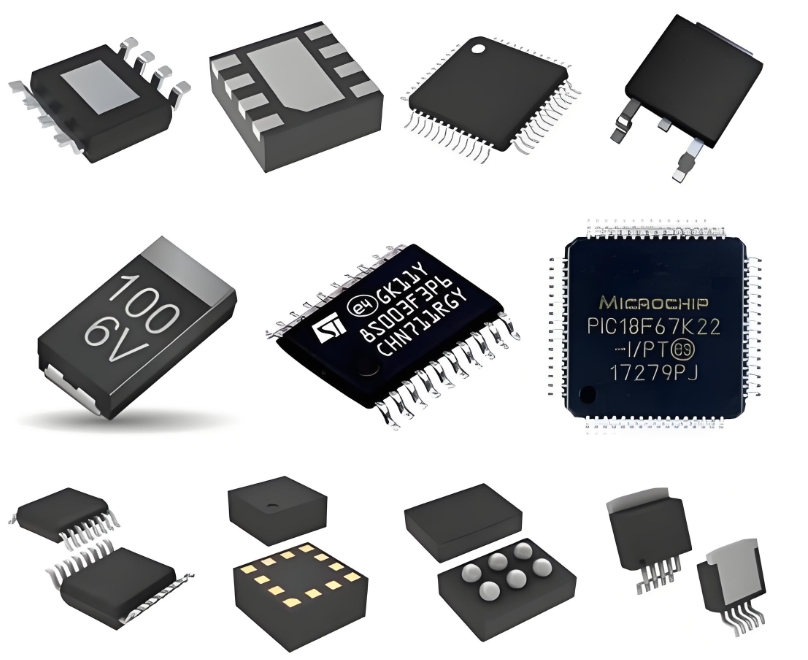
* **Compact TSSOP Package:** Housed in a 24-lead TSSOP package, it is designed for space-constrained PCB designs.
**Internal Architecture and How It Works**
The core of each channel is a series of 255 identical resistive elements. Between each element and at either end are tap points connected to the outputs of a **256-to-1 analog multiplexer**—the wiper. The desired wiper position is loaded into a 16-bit serial-input shift register. The data format consists of address bits (selecting which of the six potentiometers to update) followed by the 8-bit data value that sets the wiper's tap point (from 0 to 255). A simple SPI command can update all six channels simultaneously or target a specific one individually.
**Applications of the AD5206BRUZ10**
The versatility of this digipot makes it a key component in numerous systems:
* **Programmable Gain Amplifiers (PGAs):** Used to set the gain of op-amp circuits by controlling feedback resistance.
* **LCD Display Contrast and Brightness Control:** Precisely adjusts bias voltages for liquid crystal displays.
* **Audio Equipment:** Provides digital volume control and tone adjustment.
* **Sensor Calibration and Trimming:** Allows for automated, software-based calibration of sensor systems, eliminating manual trimming pots.
* **Industrial Control Systems:** Used for setting thresholds, biases, and reference points in process control instrumentation.
**Advantages Over Mechanical Potentiometers**
The transition to digital potentiometers like the AD5206BRUZ10 offers significant benefits:
* **Enhanced Reliability:** No moving parts means no mechanical wear, resulting in a much longer operational lifespan.
* **Remote Control and Automation:** Resistance values can be set and adjusted remotely via software, enabling automated calibration sequences and system reconfiguration.
* **Reduced Size and Noise:** The integrated multi-channel design saves board space and is immune to vibration and environmental contaminants. It also produces no unwanted audible or electrical noise when adjusting.
* **Improved Precision:** Digital control ensures highly repeatable and precise settings.
**Design Considerations**
When implementing the AD5206BRUZ10, engineers must consider:
* **Wiper Resistance (~50 Ω):** The on-resistance of the analog switch (wiper) is in series with the selected tap resistance. This can affect performance in very low-resistance applications.
* **Voltage Limitations:** The analog signals applied to the A, B, and W terminals must remain within the device's power supply rails (V+ to GND).
* **Temporary Settings During Programming:** The wiper may briefly transition through other tap points during the SPI write cycle, which could cause glitches in sensitive circuits. This can be mitigated by using the asynchronous reset (RS) pin or careful timing.
ICGOODFIND: The **AD5206BRUZ10** is a highly integrated and versatile component that **modernizes circuit adjustment and control**. Its **6-channel architecture** provides exceptional value and functionality, making it an indispensable tool for designers seeking to add digital programmability, enhance reliability, and reduce the form factor in analog systems. From audio controls to precision instrumentation, it demonstrates the clear advantages of digital over mechanical solutions.
**Keywords:** Digital Potentiometer, SPI Interface, Programmable Gain, Analog Devices, Signal Conditioning

